A sore shoulder.
Then a niggling knee.
A few weeks later, your Achilles starts giving you trouble.
You finally feel like you’re getting on top of one injury, and something else starts hurting.
Sound familiar?
It’s frustrating, especially when you’re trying to be consistent with your training.
Sometimes injuries happen. There might be a specific movement, accident, or underlying issue responsible.
But when you keep picking up different niggles, it’s worth taking a closer look at what’s happening beyond the injured area.
There are a few things I’d encourage you to consider.
1. Has your training volume changed?
Think about what your training has looked like over the past few weeks.
Have you gone from two sessions a week to five?
Started running on your days off?
Added extra strength work or substantially increased the weights you’re lifting?
Your muscles, tendons, bones, and joints adapt to the demands you place on them.
But that adaptation takes time.
When we change training volume or intensity faster than our bodies are prepared for, we can increase our risk of injury.
That doesn’t mean that we shouldn’t train or move more. It just means that you might need to make these changes more gradually.
Running, surfing, gardening, physical work, and weekend sport all contribute to the physical load on your body.
2. Are you eating enough?
We often talk about nutrition in relation to body composition, but eating enough is also important for maintaining healthy muscles, bones, and other tissues.
Your body needs energy to train, recover, repair, and adapt.
Protein provides the building blocks for muscle repair.
Carbohydrates help fuel movement and replenish energy stores.
Dietary fats support important functions, including hormone production.
And a range of vitamins and minerals are essential for maintaining healthy tissues.
If you’re regularly training hard while eating less than your body needs, your recovery and health can suffer.
Prolonged under-fuelling can also contribute to an increased risk of certain injuries, particularly bone stress injuries.
So it’s worth asking yourself:
Am I giving my body enough food to support everything I’m asking it to do?
If you are unsure if you are eating enough then we really like this calculator from Precision Nutrition. It provides visual guides and lots of other helpful information.
3. How well are you sleeping and recovering?
Sleep is an important part of recovery.
If you’re consistently getting poor-quality sleep, your body may have a harder time recovering from training.
And it’s worth considering what’s happening outside the gym too.
Work, family responsibilities, emotional stress, and long days can all influence how you’re feeling and recovering.
Some weeks, the training volume you usually manage comfortably might feel much harder.
4. Are you giving injured tissues time to rebuild their capacity?
Sometimes a niggle settles down, so we go straight back to doing everything we were doing before.
But feeling better doesn’t necessarily mean the affected area is ready for all the demands we’re about to place on it.
Depending on the injury, rebuilding strength, movement confidence, and tolerance to load may take time.
Sometimes a small modification is all that’s needed to make a workout more manageable and to help your body to continue to repair.
Other times, you might need to give a particular movement a break.
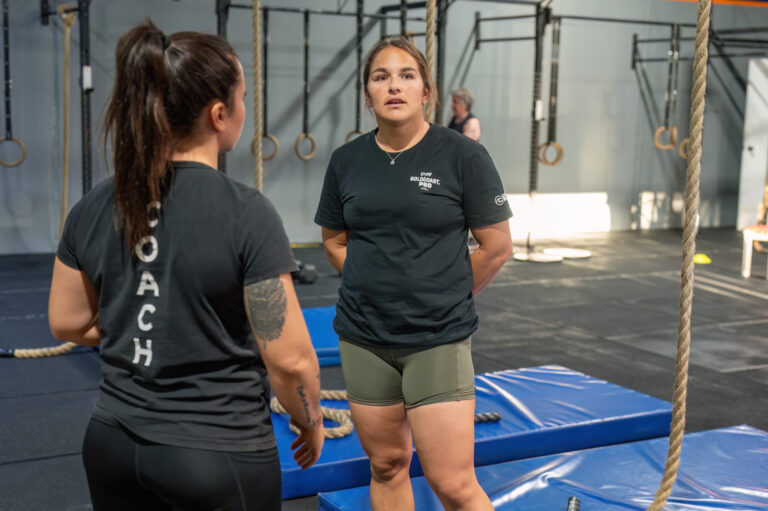
Our coaches are great at helping you to make these adjustments and can provide personalised programming to support a gradual return to training, working alongside your treating health professional where needed.
If you’re repeatedly experiencing pain, having it assessed by a qualified health professional is important.
5. Are you paying attention to the early signs?
I think most of us have been guilty of ignoring a little discomfort and hoping it will disappear.
Sometimes it does.
Other times, that niggle becomes something that affects our training for weeks or months.
How the symptoms behave can also provide you with valuable information.
Does the discomfort improve as you warm up?
Does changing the movement help?
And how does the affected area feel afterwards?
These observations can provide useful information about what your body can tolerate.
If something keeps bothering you, changes how you move, or gets worse with exercise, it’s worth addressing early.
Talk to your coach. We can help you modify training where appropriate and work alongside your osteopath, physiotherapist, or other treating professional.
So, where should you start?
If you keep picking up different injuries, take a moment to look back over the past month or two.
Has your training changed?
Are you eating enough?
How has your sleep been?
Have you been under more stress than usual?
Are you allowing enough time to rebuild after an injury?
Alison, from Fluid Motion Osteopathy has recently used the analogy of a capacity bucket. Everything happening in your life contributes to how much your body can comfortably manage at a given time.
And sometimes, when that bucket is already quite full, the training you would normally tolerate comfortably becomes harder to recover from.
These questions won’t diagnose the cause of your pain, but they might help identify something worth addressing.
And if you can’t work out what’s going on, that’s a good reason to seek some professional guidance.
We want you to be able to train consistently for years to come.
Sometimes that means adjusting what you’re doing now so you can keep doing the things you enjoy well into the future.
Ehren